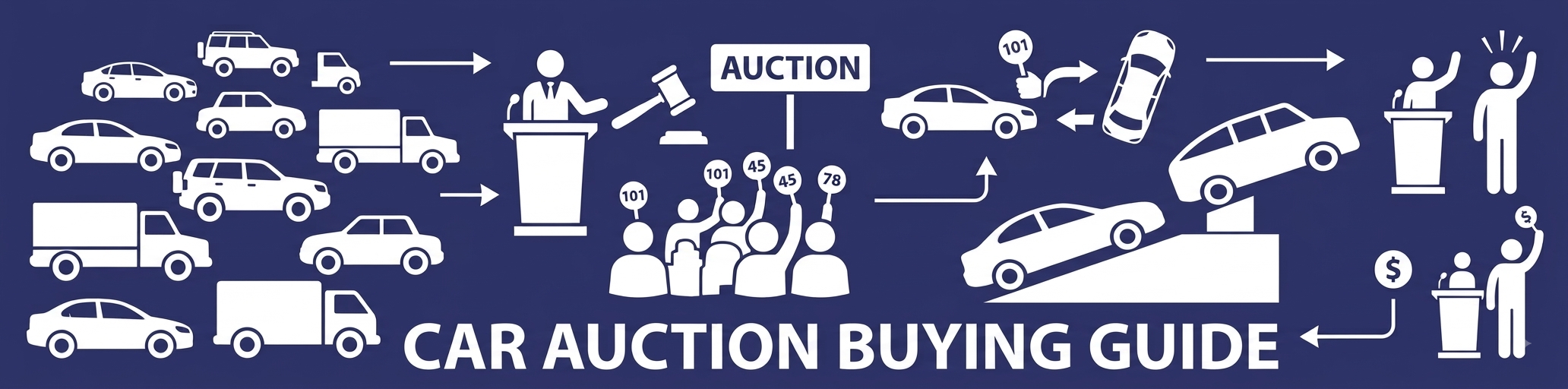
Converting retired commercial vans, utility vehicles, and government transport units into personal camper vans or mobile work rigs has become one of the most popular uses for public auction assets. Government agencies, school districts, and municipal public works departments routinely offload cargo vans, passenger shuttles, and box trucks that serve as excellent foundation platforms for custom camper builds.
Purchasing a camper conversion base through a public liquidation offers substantial savings compared to buying from commercial dealerships, but camper builders must evaluate vehicle dimensions, electrical configurations, and mechanical weight capacities before bidding.

1. Top Auction Platforms for Camper Van Conversions
Selecting the right vehicle chassis determines your interior layout, payload capacity, and off-grid capabilities:
+-------------------------------------------------------------------------------+
|                      POPULAR AUCTION CONVERSION PLATFORMS                      |
+-------------------------------------------------------------------------------+
| [Ford Transit / High Roof]     --> Standard standing room; easy gas maintenance|
| [RAM ProMaster]               --> Widest cargo box (transverse bed layouts)   |
| [Chevrolet Express / GMC Savana] --> Body-on-frame durability; V8 towing power  |
| [Freightliner / Sprinter 2500] --> Diesel fuel economy; high roof clearance   |
+-------------------------------------------------------------------------------+
A. Ford Transit (Mid & High Roof)
-
Why it's popular: Available in multiple roof heights and wheelbases, with widely available parts across North America. The gasoline 3.7L V6 and 3.5L EcoBoost engines are familiar to most mechanics.
-
Auction Source: Retired municipal delivery units, administrative transport fleets, and public utility vans.
B. RAM ProMaster
-
Why it's popular: Its Front-Wheel-Drive (FWD) layout eliminates a rear drive shaft, allowing for a lower floor height and a wider cargo box. The square interior walls make insulation and cabinetry installation easier.
-
Auction Source: Local health department mobile clinics, code enforcement units, and city delivery fleets.
C. Chevrolet Express / GMC Savana (Full-Size Cargo)
-
Why it's popular: Built on a heavy-duty body-on-frame chassis with robust V8 engines (5.3L / 6.0L). Excellent for rugged overland builds or heavy camper interiors.
-
Auction Source: Water utility departments, park ranger fleets, and public works service vans.
2. Critical Build Metrics: Payload Capacity and Gross Vehicle Weight Rating (GVWR)
The most common engineering mistake camper builders make is underestimating the weight of building materials, water tanks, batteries, and living gear.
-
GVWR (Gross Vehicle Weight Rating): The maximum total allowable weight of the vehicle, including the chassis, fluids, passengers, cargo, and interior build-out.
-
Payload Capacity = GVWR − Curb Weight: This represents the exact weight allowance remaining for your interior build (framing, solar setup, freshwater tanks, insulation, and cabinetry).
| Vehicle Class | Typical GVWR | Payload Allowance for Build | Recommended Camper Build Type |
| Half-Ton (1500 Series) | 6,000 – 7,200 lbs | 1,200 – 1,800 lbs | Minimalist build (light plywood, portable power station, soft storage). |
| Three-Quarter Ton (2500 Series) | 8,500 – 9,500 lbs | 2,500 – 3,500 lbs | Full camper conversion (fixed bed, freshwater system, basic solar bank). |
| One-Ton (3500 Series / Dually) | 10,000 – 13,500 lbs | 4,000 – 6,000+ lbs | Heavy-duty build (hardwood, shower units, heavy battery banks, towing gear). |
3. Pre-Bidding Inspection Checklist for Camper Builders
When evaluating a fleet van on preview day, inspect these specific conversion checkpoints:
-
Roof Integrity and Hole Count: Government service vans frequently feature roof-mounted ladder racks, emergency strobe lights, or radio antennas. Check for drill holes or rust spots on the roof panel that require welding or marine-grade sealant patches.
-
Interior Floor Condition: Pull up rubber cargo mats to inspect the metal floor pan for structural rust, especially near wheel wells and rear door sills.
-
Auxiliary Electrical Equipment: Many public utility vans feature secondary alternators, heavy-duty inverter wiring, or factory auxiliary batteries—components that can save you hundreds of dollars when setting up your camper's off-grid power system.
-
Rear Door Window Configurations: Decide whether you prefer a "Window Van" (better visibility, more natural light, but less thermal insulation) or a "Panel / Cargo Van" (easier insulation, better privacy, easier wall panel mounting).
4. Administrative and Titling Challenges: Van to RV Reclassification
Registering a former commercial or municipal van as a personal vehicle or Recreational Vehicle (RV) requires specific administrative steps:
-
Commercial to Personal Title Reassignment: Some state motor vehicle departments initially title cargo vans under commercial classifications, which carry higher registration fees and insurance premiums.
-
RV Reclassification Requirements: To reclassify a cargo van title to a "Motorhome" or "RV" status (which significantly lowers insurance costs), many jurisdictions require proof that the vehicle contains permanently installed living amenities, such as:
-
A fixed cooking facility (built-in stove or cooktop).
-
A permanent refrigeration unit.
-
A self-contained toilet system.
-
An internal 110V–125V electrical system or shore power hookup.
-
A permanently installed freshwater supply system.
-
Summary Action Steps for Camper Van Bidders
-
Calculate Build Weight First: Choose a 2500 or 3500 series chassis if you plan to install fixed cabinetry, water tanks, or solar battery systems.
-
Inspect the Cargo Area Floor and Roof: Factor roof hole repairs and floor rust remediation into your conversion budget.
-
Verify Local RV Reclassification Laws: Check your state or regional motor vehicle guidelines to understand what amenities are required to re-title a commercial fleet van as an RV.
