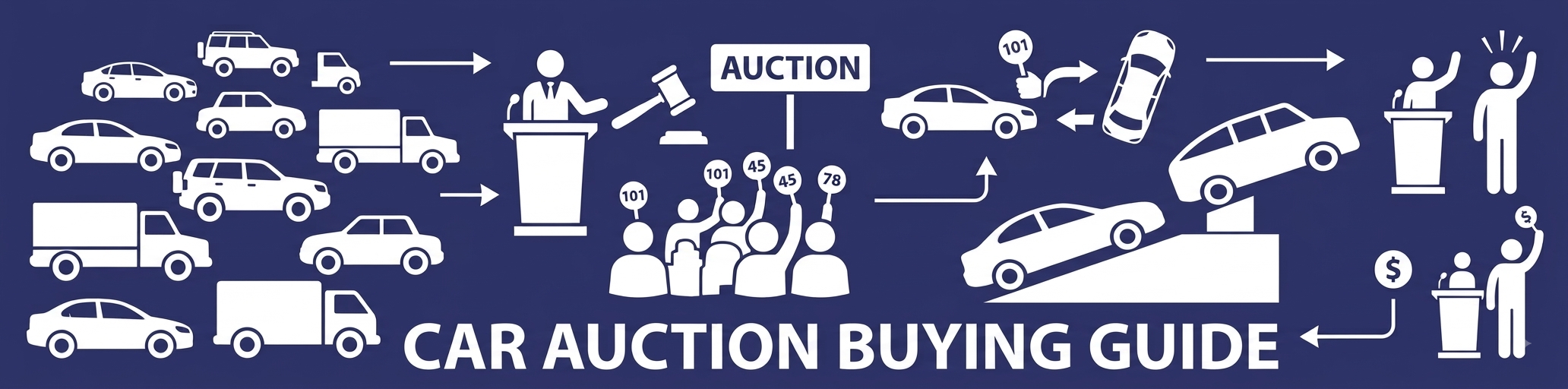
Winning the bid at a public or government auto auction is only half the process. Successfully transferring ownership, registering the vehicle, and driving it legally on public roads requires navigating a specific set of administrative and documentation steps.
Because auction assets frequently stem from government fleet liquidations, law enforcement seizures, or municipal asset retirements, handling the paperwork correctly prevents registration delays, unexpected tax liabilities, or title issues.
1. Primary Documents Provided by Auction Houses

Upon settling your final invoice (hammer price plus buyer fees), the auction manager or liquidation authority must provide a specific packet of ownership documents. Always review this paperwork on-site before leaving the auction facility:
-
Bill of Sale (Invoice of Sale):
The official receipt detailing the purchase price, buyer and seller details, vehicle Identification Number (VIN), sale date, and final transaction amount. This serves as primary proof of purchase.
-
Government Form SF-97 (Certificate of Release of a Motor Vehicle):
Used specifically for federal, military, or municipal government fleet liquidations. Form SF-97 serves as the official federal reassignment document allowing a buyer to apply for a standard state or regional title.
-
Reassigned Vehicle Title:
If the vehicle was owned by a local municipality, utility company, or corporate fleet, you will receive a standard title signed over by the authorized agency representative.
-
Certificate of Repossession / Seizure Order:
For impounded or seized property sales, this legal document certifies that the court or issuing authority has terminated prior ownership rights and authorized the public sale.
2. Step-by-Step Title Transfer Process
To transition an auction vehicle from public asset status to a fully registered private vehicle, follow this structured administrative workflow:
[1. Settle Auction Invoice] ──> [2. Obtain SF-97 / Reassigned Title] ──> [3. Complete VIN Verification]
                                                                                  │
                                                                                  ▼
[6. Receive New Title & Plates] <── [5. Pay Taxes & Registration Fees] <── [4. Pass Inspection]
Step 1: VIN Verification & Physical Inspection
Many local registration authorities require a mandatory physical VIN Inspection for vehicles coming from government registries, out-of-state auctions, or federal fleet liquidations.
-
What is checked: A certified inspector or law enforcement officer verifies that the physical VIN plate on the dashboard and door jamb matches the paperwork exactly and has not been tampered with.
Step 2: Safety & Emissions Testing
Before a new title and license plates can be issued, the vehicle must pass local compliance standards:
-
Safety Inspection: Verifies working lights, horn, windshield integrity, brake systems, and tire condition.
-
Emissions / Smog Check: Required in many jurisdictions to confirm the exhaust system and catalytic converters meet regional environmental standards.
Step 3: Registration, Tax Settlement, and Titling
Submit your complete document packet to your local motor vehicle authority (DMV / Public Service Center / Registration Office):
-
Original Bill of Sale and Form SF-97 (or signed title).
-
Proof of physical VIN verification and safety/emissions certificates.
-
Proof of valid auto insurance coverage.
-
Payment for sales tax (calculated on the final purchase price), titling fees, and registration plate fees.
3. Title Types & Red Flags to Avoid
Understanding the exact classification of the title you receive is critical for insurance coverage and future resale value:
| Title Type | Description | Insurance & Registration Impact |
| Clean / Clear Title | Standard ownership title with no total-loss or severe structural damage history. | Full comprehensive/collision insurance eligible; standard registration process. |
| Salvage Title | Vehicle declared a total loss due to collision, flood, or fire damage. | Cannot be driven legally; requires rebuilding and passing a strict structural inspection. |
| Rebuilt / Prior Salvage | A former salvage vehicle that has been repaired and passed safety inspections. | Registrable and road-legal; limited to basic liability insurance coverage in many regions. |
| Junk / Scrap / Parts Only | Vehicle sold strictly for material recovery or spare components. | Non-titlable. The vehicle can never be legally registered or driven on public roads. |
4. Key Takeaways for Auction Buyers
-
Never Accept Verbal Promises: Ensure all title reassignments, signatures, and government seals are physically present on the official documents provided at pickup.
-
Mind the Clearance Deadline: Registration authorities typically give buyers 30 days from the invoice date to transfer ownership before late penalties apply.
-
Verify Insurance First: Most jurisdictions require active auto insurance before issuing temporary transit permits or permanent plates for auction vehicles.
When browsing government property registries and state asset auction catalogs, you will frequently encounter technical codes, brief shorthand designations, and structural grading scales used to describe a vehicle's mechanical and cosmetic state. Because government fleets and public liquidations operate under strict administrative reporting, learning to read these condition codes can prevent costly mistakes and help you spot hidden value.
This guide decodes standard government asset grading conventions, explains how to interpret fleet maintenance notes, and outlines red flags to avoid.

1. Common Government Asset Condition Codes
Most municipal, state, and federal auction listings utilize standardized condition categories during initial asset intake. While codes can vary slightly between agencies, the following scale represents the industry standard:
-
Condition Code 1 — Excellent / Like New:
The vehicle is fully operational with minimal cosmetic blemishes. Typically assigned to administrative sedans or supervisory vehicles with low mileage that are being retired due to scheduled fleet lifecycle replacement rather than damage.
-
Condition Code 2 — Good / Usable:
The vehicle is in sound mechanical condition with normal wear and tear consistent with its age and mileage. Minor exterior scratches, small dents, or minor interior upholstery wear are expected, but no major mechanical repairs are required for immediate operation.
-
Condition Code 3 — Fair / Repairable:
The vehicle is operational or startable, but requires minor to moderate mechanical work or cosmetic reconditioning. Common issues include worn suspension components, failing air conditioning systems, weak batteries, or tires near the end of their service life.
-
Condition Code 4 — Poor / Non-Operational:
The vehicle has major mechanical defects, missing critical components (such as an engine ECU, transmission, or catalytic converter), or structural frame damage. Frequently designated as "Parts Only" or "Tow-Away Only."
-
Condition Code X — Salvage / Scrap:
Assigned to vehicles involved in major collisions, severe flood damage, or structural corrosion where the cost of repair exceeds the asset's residual value.
2. Deciphering Fleet Service & Maintenance Acronyms
Government asset records and intake worksheets often include short-hand codes left by municipal mechanics. Knowing these terms helps you understand the vehicle’s operating history:
| Acronym / Term | Definition | Impact on Buyer |
| P/O (Police Original) | Retired police service unit (Interceptor/Utility). | High idle hours; upgraded cooling, suspension, and alternator systems. |
| OOR (Out of Service) | Vehicle removed from official service. | Review the attached date; long sitting times can dry out rubber hoses and seals. |
| E/R (Engine Runs) | Engine starts and turns over. | Indicates basic electrical and mechanical turnover, but does not guarantee roadworthiness. |
| C/O (Check Engine Light On) | Active diagnostic trouble codes present. | Requires an OBD-II scanner code read to determine underlying fault complexity. |
| D/G (Decals Removed) | Agency vinyl wraps and logos stripped. | Expect minor paint ghosting or adhesive residue on exterior door panels. |
3. High Idle Hours vs. Mileage: The Public Fleet Factor
A unique aspect of evaluating government fleet assets—especially emergency response, utility, and municipal public works vehicles—is the distinction between Odometer Mileage and Engine Idle Hours.
-
The 1-to-33 Rule: As a general fleet engineering rule, 1 hour of engine idling equals approximately 25 to 33 miles (40 to 50 km) of driving wear on internal engine components, oil life, and cooling systems.
-
Why It Matters: A police cruiser or utility truck showing only 60,000 miles on the odometer might have 4,000 engine idle hours. That idle time translates to an additional 100,000+ miles of operational wear on the engine valve train, water pump, and alternator. Always check the digital instrument cluster or request engine hour metrics if available in the auction listing.
4. Key Red Flags in Auction Inventory Sheets
When reviewing government vehicle catalogs, certain listed descriptions should trigger extra scrutiny or lower your maximum bid limit:
-
"Keys Missing / No Key Present": Modern vehicle keys require electronic transponder programming. Replacing a lost proximity key or smart fob can cost between $150 and $450 depending on the manufacturer.
-
"Seized / impounded - History Unknown": Unlike standard fleet retirements with complete service records, impounded property often lacks maintenance history and may have sat idle in storage yards for extended periods.
-
"Title Pending / Bill of Sale Only": Ensure the auction house guarantees a clean transfer of title. If a lot is sold on a "Bill of Sale Only," verify whether your local motor vehicle registry permits re-titling such assets without costly bonded title procedures.
Summary Action Steps for Bidders
-
Cross-Reference Mileage with Hours: Always factor engine idle hours into your total valuation equation, not just the physical odometer reading.
-
Scan intake notes for missing parts: Confirm whether key assemblies (e.g., alternator, starter, battery, exhaust catalytic converters) remain intact on Condition Code 3 and 4 vehicles.
-
Budget for Reconditioning: Add an extra 10% to 15% onto your acquisition cost for fluid flushes, new batteries, and minor mechanical reconditioning after taking delivery.
Buying a vehicle through public or government auto auctions can be one of the most cost-effective ways to acquire a used car, truck, or commercial asset. State agencies, municipal fleets, and law enforcement organizations routinely liquidate surplus vehicles, trade-ins, and impounded property to clear inventory and recoup public funds.
However, purchasing at an auction differs significantly from buying from a dealership or private seller. There are no test drives around the block, sales reps, or traditional warranties. This guide breaks down how public auto auctions work, how to evaluate vehicles, and how to place smart bids without overpaying.
1. Types of Public Auto Auctions
Before placing a bid, it is essential to understand where the vehicles originate and how the auction is structured:
-
Government Surplus Auctions: Federal, state, and local agencies periodically retire fleet vehicles (such as police cruisers, utility trucks, administrative sedans, and service vans). These vehicles typically feature detailed maintenance records and routine service histories.

-
Tow-Yard & Seized Property Sales: Law enforcement agencies and municipalities auction impounded, abandoned, or seized vehicles. Condition can vary widely, and documentation must be thoroughly reviewed prior to purchase.
-
Wholesale Fleet Liquidations: Utility companies, banks, and corporate entities offload surplus transport vehicles to public buyers via organized online or physical auction houses.
2. Pre-Auction Preparation & Research
Success at an auto auction is decided before the bidding opens. Proper preparation involves three key steps:
A. Reviewing the Lot Catalog
Auction houses release inventory catalogs days or weeks in advance. Study the vehicle listings for key details:
-
Year, Make, Model, and Trim level
-
Odometer reading (Mileage)
-
Engine size and Drivetrain (FWD, RWD, 4WD/AWD)
-
Title status (Clean, Salvage, Rebuilt, or Bill of Sale)
B. Understanding Title Statuses
Never bid on a lot without checking its title designation:
-
Clean Title: The vehicle has no history of being declared a total loss by an insurance company.
-
Salvage Title: The vehicle has sustained significant damage or was previously written off.
-
Rebuilt Title: A former salvage vehicle that has passed state safety and structural inspections.
C. Running Vehicle History Reports (VIN Checks)
Obtain the Vehicle Identification Number (VIN) from the auction catalog and run a history report (via services like Carfax, AutoCheck, or local government databases) to verify:
-
Past accident history and airbag deployments
-
Previous ownership type (Government fleet, rental, private owner)
-
Service and registration records
3. On-Site Inspection Strategy
If the auction allows in-person preview days, take full advantage. While you usually cannot drive the vehicle, a thorough visual inspection can reveal critical information:
| Inspection Area | Key Items to Check | Red Flags |
| Engine & Fluids | Oil level/color, transmission fluid, coolant condition. | Milky oil (blown head gasket), burnt fluid odor, fresh heavy leaks. |
| Body & Structure | Panel alignment, frame rails, paint uniformity. | Uneven panel gaps (past collisions), structural frame rust, bubbling paint. |
| Interior & Electrical | Wear pattern on pedals/steering wheel, dashboard lights. | Musty smell (water/flood damage), missing modules, active warning lights. |
| Tires & Suspension | Tread depth, brand consistency, stance height. | Uneven tire wear (alignment/suspension damage), sagging corners. |
4. Bidding Tactics & Financial Discipline
The most common mistake first-time auction buyers make is letting emotion drive their bids.
Set a Strict Maximum Bid
-
Determine the Fair Market Value (FMV) of the vehicle using local market data and pricing guides.
-
Deduct anticipated repair costs and reconditioning expenses.
-
Deduct Buyer’s Premiums and administrative fees charged by the auction house (typically 5% to 15% of the hammer price).
-
The remaining number is your absolute maximum bid. Do not exceed it.
Auction Day Rules
-
Watch a Few Lots First: Observe the pace of the auctioneer and identify regular commercial buyers versus individual bidders.
-
Beware of "Phantom Bidding": Stay focused on the current price floor and bid increment steps.
-
Factor in Transportation: Ensure you have a plan (and budget) to tow or transport the vehicle off the lot within the required clearance timeframe (usually 24–48 hours).
Summary Checklist for Auction Buyers
-
Verify Registration: Ensure you meet registration requirements (some auctions require a deposit or prior account validation).
-
Read Terms & Conditions: Know the accepted payment methods (wire transfer, cashier's check, credit card limits).
-
Inspect the Title: Confirm the paperwork is transferable in your jurisdiction before placing a bid.
-
Stick to Your Limits: Factor fees, taxes, and towing into your total budget before raising your paddle or clicking "Bid."
